
The Eight Function-Attitudes In Depth
Extraverted Thinking (Te)
- Focuses on efficiency, structure, measurable progress, and clear execution
- The Logical Executive: Also called Productivity or The Manager
- Applies especially to TJ types (ENTJ, ESTJ, INTJ, ISTJ)
“Efficiency is doing things right; effectiveness is doing the right things.” - Peter Drucker
Spot Te
Strong Te users often speak directly; they:
- Define the path quickly. They establish goals, roles, timelines, and next steps within minutes of entering a situation.
- Organize the external world. They build systems, workflows, and structures that make tasks efficient, predictable, and measurable.
- Think and speak in sequences. Their communication comes in steps, lists, contingencies, and logical chains - often out loud.
- Rely on objective data. They reference facts, metrics, research, and quantifiable evidence to decide and move forward.
Motivate Te
- Provide clear goals. Te engages fully when success is defined up front. “The target is a 15% improvement by June—can you help outline the steps?”
- Show evidence. Bring data, metrics, or proven examples that support your point. “Here’s the customer feedback analytics that sparked my suggestion.”
- Be concise and specific. Direct, concrete requests create instant momentum. “I need a two-sentence summary by noon—can you draft it?”
- Honor efficiency. Avoid unnecessary steps or vague processes. “We can skip the long meeting if you prefer. I’ll send a 1-page brief instead.”
- Acknowledge results. Celebrate measurable accomplishments, not just effort. “Your checklist shaved two days off the timeline. Great work.”
- Ask for their thinking. Inviting their judgment signals trust. “If you were in charge, how would you streamline this?”
Connect With Te
- Respect their time. Lead with the purpose, then add context if needed. “Here’s the short version: I need clarity on the budget. Want the backstory too?”
- Share your reasoning. Te trusts people who reveal their logic clearly. “Here’s my reasoning: the numbers dropped after the policy change.”
- Use actionable language. Offer observations and proposals, not vague emotional cues. “Here’s what I’m noticing… and here’s what I propose we do next.”
- Follow through. Reliability is the foundation of relationship with Te types. “I said I’d have it by Friday. Here it is.”
Don’t Do It!
Never be vague, evasive, or disorganized when discussing tasks, responsibilities, or expectations.
Te experiences unclear communication as inefficiency, and inefficiency as unnecessary friction.
For TJ types, clarity is respect.
“You never have to guess where you stand with me.” - Courteney Cox
Collaborate With Te
(ESTJ, ISTJ, ENTJ, INTJ)
Te brings structure, momentum, and execution discipline. When paired well, Te accelerates progress and builds systems that last. Below are practical guides for working with TJ types across function groups.
Te Strengths & Challenges
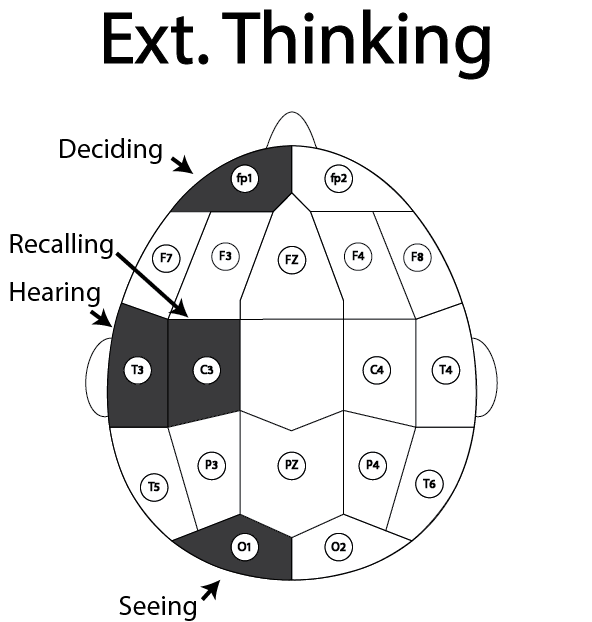 Te Brain Strengths
- Sequence tasks quickly
- Apply logic to organize the environment
- Use data for fast, evidence-based decisions
- Streamline processes for efficiency
Research by Dario Nardi highlights several patterns in Te types:
- Fp1 activation: Supports rapid decision-making and task focus.
- T3 & O1 regions: Aid in scanning for relevant facts, cues, and measurable information.
- C3 engagement: Pulls stored procedures and step-by-step logic for reliable execution.
“Gates believes everything can be ... reduced to essentials and rearranged into a logical sequence that will achieve a particular goal.” -Stewart Aisop on Bill Gates
Te Team Strengths
Extraverted Thinking (Te) strengthens teams and organizations through six core execution-based and structure-building capacities.
- Operational Direction. Te quickly defines goals, roles, and next steps, giving teams clear direction and eliminating ambiguity. This establishes predictable workflows and keeps organizational efforts aligned and focused.
- Energy & Momentum. Te drives action, cuts through bottlenecks, and accelerates progress. Its decisive leadership boosts team productivity and helps organizations maintain forward movement during complex or high-pressure periods.
- Structural Clarity. Te creates systems, standards, and procedures that keep teams organized and efficient. This supports reliability, reduces errors, and helps organizations scale without losing cohesion.
- Process Optimization. Te constantly refines workflows to reduce wasted time, unnecessary steps, or duplicated effort. This strength improves team performance and reinforces a culture of continuous improvement across the organization.
- Data-Driven Insight. Te interprets metrics, patterns, and measurable results quickly. This helps teams make rational decisions, identify risks early, and guide organizational strategy with clear evidence rather than guesswork.
- Accountability & Follow-Through.Te establishes clear expectations and ensures commitments are met. This keeps teams dependable, strengthens organizational trust, and supports a culture where standards are upheld consistently.
The Te Process
Te types (ESTJ, ENTJ, ISTJ, INTJ) drive progress through real-time organization and logical execution.
- Scan the task environment
Identify goals, resources, constraints, gaps, and inefficiencies in the current system. - Predict operational outcomes
Anticipate how steps, timelines, and decisions will unfold based on evidence, workload, and past patterns. - Choose the most efficient path
Select the sequence, structure, or plan that will achieve the goal with the least friction and clearest execution. - Act through coordination and implementation
Assign roles, set priorities, establish metrics, and take decisive steps that keep work moving forward. - Repeat the cycle
Rescan, refine, and optimize the process through ongoing feedback and measurable results.
Try Extraverted Thinking
- Take a goal and outline the first three concrete steps to achieve it.
- Create a simple checklist for a daily or weekly task.
- Break a complex problem into logical chunks: start → middle → end.
- Organize a small space (desk, closet) using clear categories.
- Describe the exact steps someone needs to tie their shoes.
- Plan the most efficient way to help someone move houses.