
The Eight Function-Attitudes In Depth
Extraverted Sensing (Se)
- Focuses on real-time engagement: how immediate experience drives skillful action
- The Sensation Seeker: Also called The Tactician or The Realist
- Applies especially to SP types (ESFP, ESTP, ISFP, ISTP)
“Learning to live completely in the present moment is the greatest gift one can acquire.” - Ernest Hemingway
Spot Se
- “Just do it!” They learn by doing - not by reading, theorizing, or waiting. Se moves first, adjusts second, and trusts real-time feedback over abstract instructions.
- "Where’s the action?" Extraverted Sensing loves to be in the middle of the excitement. Both variety and intensity of environmental stimuli are important for its well-being.
- “Don't bore me.” Variety, intensity, and sensory engagement energize them. Routine, repetition, and slow processes feel draining or restrictive.
- "It’s harder to get permission than ask for forgiveness." Extraverted Sensing works with immediate results. Rules and regulations are more abstract. It’s about hard-earned virtuosity in a playing field where anything goes.
“It is not the critic who counts, not the one who points out how the strong man stumbled, or where the doer of deeds could have done better. The credit belongs to the one who is actually in the arena.” - Teddy Roosevelt
Motivate Se
Se is motivated when things are immediate, hands-on, and engaging. To draw out their best work, focus on relevance, autonomy, and opportunities for real-time action.
- Keep it hands-on. Se engages fastest when they can interact directly with the work or environment rather than discuss it abstractly.
- Engage their real-time perception. “What do you see?” Se engages when you draw on their sharp situational awareness: details, shifts, opportunities, or risks that show up in real time.
- Let them jump in quickly. “Go for it.” Se stays motivated when they can start immediately.
- Let them steer in real time. “If something shifts, use your judgment.” Se does their best work when they can adjust without waiting for new instructions.
- Give quick, honest feedback. "That worked." Tell them what’s working and what isn't. Se trusts clean data from results, not abstract critique or theoretical rules.
“Always be ready; not thinking, yet not dreaming; ready for whatever may come.” - Bruce Lee
How to Connect With Se
The above ways to motivate Se also help to connect with Se. SP types connect best when interactions are direct and practical. In the workplace, rapport strengthens when communication is clear, active, and outcome-focused.
- Be concrete and straightforward. Keep communication clear, brief, and focused on what’s happening right now. Se connects best when people get to the point.
- Work side-by-side on something real. Se builds rapport through shared activity—checking a space together, testing a process, or solving an immediate problem shoulder-to-shoulder.
- Keep the interaction active and timely. Maintain movement in the conversation or task. Se opens up when the exchange has momentum and stays practical.
- Use honest, grounded communication. Say what you actually see. Se trusts colleagues who are direct, practical, and unfiltered—not vague, cautious, or overly diplomatic.
Don’t Bore Se!
Se gets dragged down with slow, abstract, or repetitive processes. Long theoretical discussions, drawn-out meetings, and over-explained steps feel disengaging and unnecessary.
Better approach:
Keep communication concrete, timely, and tied to what’s happening now. Use brief explanations, show rather than tell, and keep things moving.
Momentum + clarity = connection for Se.
Collaborate With SP Types
(ESTP, ESFP, ISTP, ISFP)
SP types keep teams responsive to what’s happening here and now - spotting shifts early, adjusting quickly, and solving problems through direct engagement.
Below are common pairings and how to bring out their best together.
Se Strengths
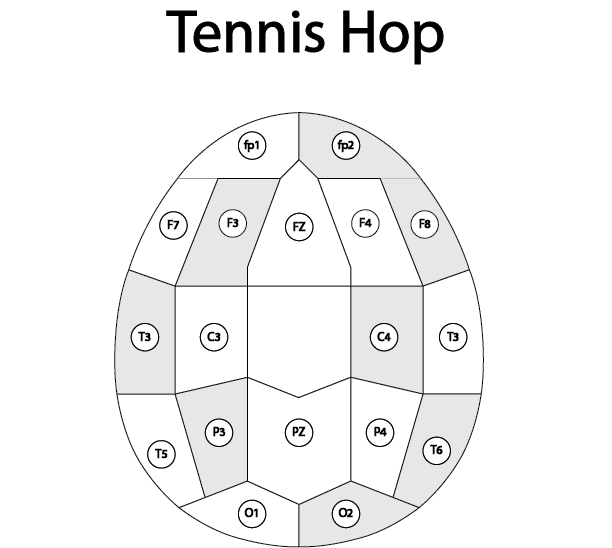 Se Brain Strengths
Research by Dario Nardi shows that Se-users display a distinctive “Tennis Hop” pattern: low-amplitude activation across the whole neocortex, lightly synchronized and ready to fire - like an athlete bouncing on their feet, prepared to respond instantly.
This reflects the lived experience of Se:
- Readiness through relaxation. The Se brain remains open and receptive, scanning the environment for shifts in movement, tone, or opportunity.
- Fast, embodied decision-making. Se makes quick, accurate micro-adjustments based on real-time sensory input - often before others consciously register what’s happening.
- Whole-brain situational awareness. Se has sharp peripheral awareness and the ability to notice subtle changes in timing, energy, or physical context.
- Calm under pressure. When action is required, Se often shifts into a steady, efficient flow state. While others tense up, Se’s brain becomes more synchronized.
“Always be ready; not thinking, yet not dreaming; ready for whatever may come.” - Bruce Lee
Se Team Strengths
- Situational Awareness. Se gives teams a sharp read on what’s happening right now. They notice shifts in tone, timing, energy, or physical conditions that others miss. This helps teams respond to emerging issues early and effectively.
- Real-Time Problem Solving. Se adapts quickly when conditions change. They excel at troubleshooting on the spot, adjusting tactics, and finding workable solutions under pressure. This keeps teams agile and prevents bottlenecks.
- Crisis Clarity. When stakes rise or timelines compress, Se brings calm precision. Their ability to focus under stress ensures clear action steps and steady momentum during emergencies or high-intensity moments.
- Momentum and Execution. Se moves work forward by taking immediate action when needed. Their bias toward implementation helps teams avoid stagnation, indecision, and over-analysis.
- Practical Testing and Feedback. Se grounds ideas in real-world reality. They test assumptions quickly, provide concrete data, and reveal what actually works. Their feedback keeps projects aligned with on-the-ground conditions.
- Adaptive Collaboration. Se adjusts smoothly to different workflows, personalities, and environments. Their flexibility helps teams stay responsive, bridge gaps between departments, and pivot without losing effectiveness.
The Se Process
Se operates through direct engagement with the present moment. Its process is embodied and responsive - sensing what’s happening now and moving with it.
- Scan the environment. Notice movement, tone, timing, physical cues, and opportunities — without analysis or prediction.
- Act on what’s happening. Respond directly to the situation: test something, touch it, adjust it, try the next move. Se learns by doing and trusts real-time feedback.
- Adjust instantly. Shift based on new cues. Refine the action, change direction, or escalate as needed. The environment guides the next step.
Bottom line: Se moves through a simple loop: scan → act → adjust. Presence is the engine.
Try Extraverted Sensing
- Notice all the details that are happening right now. What does your experience smell like, look like, taste like, touch like, sound like?
- What opportunities do you see here in the present moment?
- Play catch. Focus on getting the ball accurately to your partner and catching it when it comes your way.
- Eat a meal and put your focus completely on the food; the taste the texture, the smell, and the feel of it as you chew and swallow.